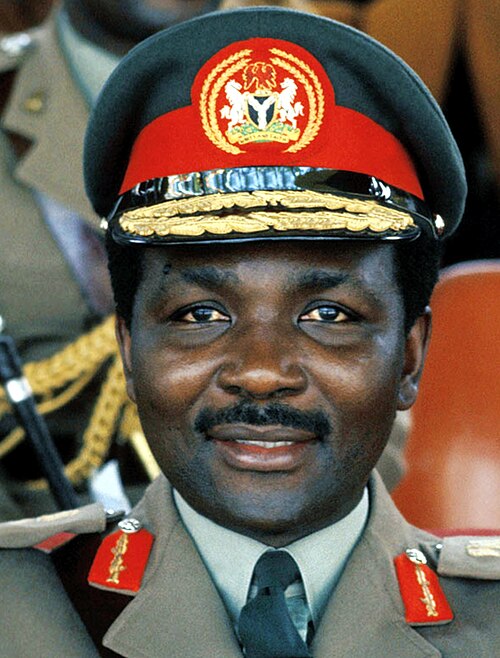
Yakubu Gowon occupies a singular place in Nigeria’s political memory: a soldier who became a statesman at the country’s most fragile moment. When he assumed power in 1966, Nigeria was barely six years old as an independent nation and already collapsing under the weight of ethnic distrust, political assassinations, and military coups. What followed under his leadership would become the defining crisis of Nigeria’s early existence—the Civil War. Yet, out of that devastation emerged a philosophy of reconciliation that still shapes the nation’s self-understanding.
Early Life and the Making of a Soldier
Born in 1934 in present-day Plateau State, Gowon grew up in a deeply religious and disciplined household. His early education took place in Northern Nigeria before he joined the Nigerian Army in the 1950s, receiving further military training in Britain. Like many of his generation, he entered the army not merely as a career but as a national duty in a newly independent state seeking cohesion and professional institutions.
By the mid-1960s, Nigeria’s military had become entangled in politics following the January 1966 coup that killed key political leaders and shattered the First Republic. The counter-coup later that year deepened ethnic polarization and pushed the country toward disintegration. Gowon, relatively junior and perceived as neutral, was elevated to leadership not because of ambition but because he appeared acceptable to rival factions within the armed forces.
A Nation at the Brink
Gowon inherited a nation on the verge of breakup. The Eastern Region, citing persecution and marginalization, declared itself the Republic of Biafra in 1967. Secession threatened not only territorial integrity but the very idea of Nigeria as a single people.
The Civil War that followed was brutal and costly, claiming over a million lives, many through starvation and displacement. Gowon’s challenge was not merely military victory but the moral question of what kind of country Nigeria would become after the conflict. Would it seek revenge, or would it attempt reconciliation?
“No Victor, No Vanquished”
When the war ended in January 1970, Gowon delivered one of the most consequential political statements in Nigerian history: “No victor, no vanquished.” This was not just a slogan; it was a policy direction. Instead of mass trials or collective punishment of the defeated side, his government launched the Three Rs Programme—Rehabilitation, Reconstruction, and Reconciliation.
Former Biafran soldiers were reintegrated into civilian life. Property confiscated during the war was, in many cases, restored. The aim was psychological healing as much as physical rebuilding. In a continent where post-war settlements often bred new cycles of conflict, Gowon’s approach was unusually conciliatory.
This decision remains one of his strongest legacies. While not all wounds healed, the policy prevented Nigeria from descending into prolonged internal war and made national unity a realistic possibility rather than an empty phrase.
State Creation and Federal Balance
One of Gowon’s most enduring structural reforms was the creation of new states. Prior to the war, Nigeria consisted of only four large regions, whose size and ethnic dominance made them politically explosive. In 1967, Gowon broke these regions into twelve states, weakening secessionist tendencies and bringing governance closer to smaller communities.
This reorganization reshaped Nigerian federalism. It reduced the fear of domination by any single region and laid the groundwork for the later expansion to today’s 36 states. Though critics argue that state creation also increased administrative costs, its political stabilizing effect at the time was undeniable.
Oil Boom and Development Ambitions
Gowon governed during the early years of Nigeria’s oil boom. The sudden inflow of petroleum revenue transformed the economy and raised hopes of rapid modernization. His government embarked on ambitious infrastructure projects, including highways, bridges, and educational expansion.
However, the oil boom also introduced problems: inflation, corruption, and weak financial controls. Nigeria’s sudden wealth outpaced its administrative capacity. While Gowon’s personal image remained modest, his government became associated with inefficiency and delayed political transition.
The Question of Democracy
Perhaps the greatest criticism of Gowon’s rule was his postponement of the promised return to civilian government. Initially, he pledged a transition by the early 1970s, but in 1974 he declared that Nigeria was not yet ready. This decision eroded trust within the military and among civilians, who feared permanent military rule.
In 1975, while attending an international summit, Gowon was overthrown in a bloodless coup. Unlike many deposed leaders, he did not fight back. He accepted exile quietly, later pursuing academic studies and living largely outside the political spotlight.
From Ruler to Elder Statesman
In later life, Gowon reinvented himself as a peace advocate. Through initiatives such as the Yakubu Gowon Centre, he promoted dialogue, youth development, and interfaith understanding. His post-power years contrasted sharply with the authoritarian image of military rule, reinforcing the idea that he saw leadership as service rather than possession.
This transformation enhanced his reputation as a statesman rather than merely a former ruler. In a political culture often marked by bitterness, Gowon’s tone remained reflective and conciliatory.
Historical Judgment
Gowon’s legacy is complex but foundational. He did not create Nigeria’s crises, but he managed their most dangerous expression. His war leadership preserved territorial unity, while his post-war policies avoided the trap of permanent division. Yet, his failure to transition promptly to civilian rule weakened democratic momentum and opened the door to further military interventions.
History remembers him not as a charismatic revolutionary like Murtala Mohammed, nor as an ideological nationalist like later rulers, but as a custodian of continuity—the man who kept Nigeria together when it was easiest for it to fall apart.
⸻
Conclusion
Yakubu Gowon’s story is inseparable from Nigeria’s survival. At a time when the country might have disintegrated into hostile fragments, his leadership insisted on unity, reconciliation, and national identity. His famous words—no victor, no vanquished—remain both an aspiration and a reminder of the moral choice Nigeria made after war.
In an age where division again challenges the idea of nationhood, Gowon’s era offers a lesson: that peace is not only won on battlefields but secured through restraint, forgiveness, and the courage to rebuild together.
Comments (0)
Leave a Comment
No comments yet. Be the first to comment!