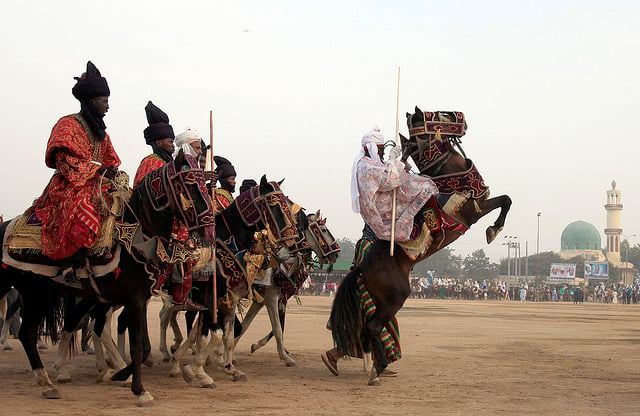
For over a millennium, the Kano Emirate has stood as one of Northern Nigeria’s most enduring symbols of power, commerce, culture, and resilience. Often hailed as Jallabar Hausa—the “Jallaba of the Hausa”—this proud title reflects Kano’s ancient reputation as a prosperous trading powerhouse, akin to the wealthy merchant regions of old Sudan known as Jallaba. The phrase, drawn from the Kano Chronicle and oral traditions, underscores the city’s commercial affluence, bustling markets, and role as a hub where wealth flowed like the trans-Saharan caravans it once hosted. (The common mishearing as “Jalla Babbar Hausa” is a later corruption; the authentic form celebrates Kano’s shared glory with Sudan’s renowned traders.)
The story begins around 999–1000 AD with the founding of Kano as one of the Hausa Bakwai (the seven legitimate Hausa city-states). Bagauda, the legendary first ruler, established the settlement near Dala Hill, a rocky outcrop that became the cradle of Kano’s early economy and politics. By the 11th century, the city had grown into a thriving center of ironworking, dyeing, agriculture, and Islamic scholarship. To protect its expanding population from raids by neighboring states, nomadic groups, and rival polities, the third king, Sarkin Kano Gijimasu (r. 1095–1134), laid the foundation for the famous Ancient Kano City Walls (Ganuwa or Badala in Hausa).
Construction of the walls spanned centuries. Begun in the early 12th century, the massive earthen fortifications—built with mud mixed with palm oil for durability—were completed in the mid-14th century during the reign of Sarkin Zamnagawa. Further expanded in the 16th century, the walls stretched approximately 14–24 km in circumference (about 9–15 miles), reached heights of 30–50 feet (9–15 meters), and had a base thickness of up to 40 feet (12 meters). They featured 13–15 fortified gates (Kofar), such as Kofar Kansakali (the first, built around 1112 AD and named after a blacksmith), Kofar Waika, Kofar Dawanau, and others that controlled entry, trade, and defense. A deep ditch reinforced the structure, and a rampart allowed defenders to patrol. These walls not only shielded Kano from invaders but symbolized the Hausa capacity for large-scale public engineering—using local labor and materials to create one of sub-Saharan Africa’s most impressive pre-colonial defenses.
The walls’ formidable scale left even the British in awe. In 1903, after forces under High Commissioner Frederick Lugard captured Kano following a fierce battle (where British Maxim guns overwhelmed defenders at the gates), Lugard recorded in his report: “The extent and formidable nature of the fortifications surpassed the best informed anticipations of our officers. Needless to say, I have never seen or even imagined anything like it in Africa.” He described walls 11–12 miles long, 40 feet thick at the base, 30–50 feet high, with loop-holed crests and a broad rampart walk—praise that highlighted Kano’s engineering prowess in West Africa.
Kano’s history is punctuated by wars that tested its strength. In the pre-jihad era, it clashed with rivals like Katsina and Zazzau over trade routes and dominance among Hausa states. The late 16th and early 17th centuries saw intensified conflicts as each sought supremacy. The defining shift came with the Fulani Jihad of 1804–1808, led by Shehu Usman dan Fodio. Initially resistant, Kano fell in 1807 under Sarkin Suleiman, integrating into the Sokoto Caliphate as an emirate with Fulani rulers from the Dabo dynasty (starting with Ibrahim Dabo in 1819). This brought relative stability but also new internal dynamics.
Rifts and civil wars have marked the emirate’s succession struggles. The most infamous was the Kano Civil War (Yakin Basasa) of 1893–1895. Following the death of Emir Muhammadu Bello in 1892, a bitter dispute erupted between two branches of the Dabo dynasty: the Tukurawa (supporters of Tukur, Bello’s son) and the Yusufawa (backing Yusuf, son of the earlier Emir Abdullahi Maje Karofi). Yusuf’s faction believed their lineage had been unfairly sidelined. The conflict turned violent—Yusuf captured southern Kano territories, allied with external forces, and waged intense battles. Yusuf died during the war, but his brother Alu Dansango continued the fight. Tukur was eventually defeated and killed in 1895, with Alu emerging victorious until the British conquest in 1903.
The British invasion ended Kano’s autonomy. Lugard’s forces, after initial skirmishes, defeated Emir Alu at the Battle of Kwatarkwashi in February 1903. Alu was exiled, and the British installed his brother Abbas (r. 1903–1931) under indirect rule, preserving the emirate structure while subordinating it to colonial authority. This marked the transition from independent emir to protected traditional ruler.
Despite these upheavals—external wars, jihadist integration, civil strife over succession, and colonial conquest—the Kano Emirate endured. Emirs like Muhammadu Rumfa (r. 1463–1499) built the grand Gidan Rumfa palace (still standing) and advanced governance; others navigated modernization while preserving traditions like the Durbar festival. The walls, though eroded by time, urban sprawl, and neglect (with only remnants surviving today), remain on UNESCO’s tentative list as a testament to Hausa-Fulani ingenuity.
Kano’s millennium-long saga—of emirs who built, warriors who defended, and a city that outlasted empires—embodies Northern resilience. From Gijimasu’s foundations to the echoes of Lugard’s awe, the emirate stands as Jallabar Hausa: prosperous, proud, and unbroken. In its gates and stories lies the heartbeat of Hausa civilization.
Comments (0)
Leave a Comment
No comments yet. Be the first to comment!