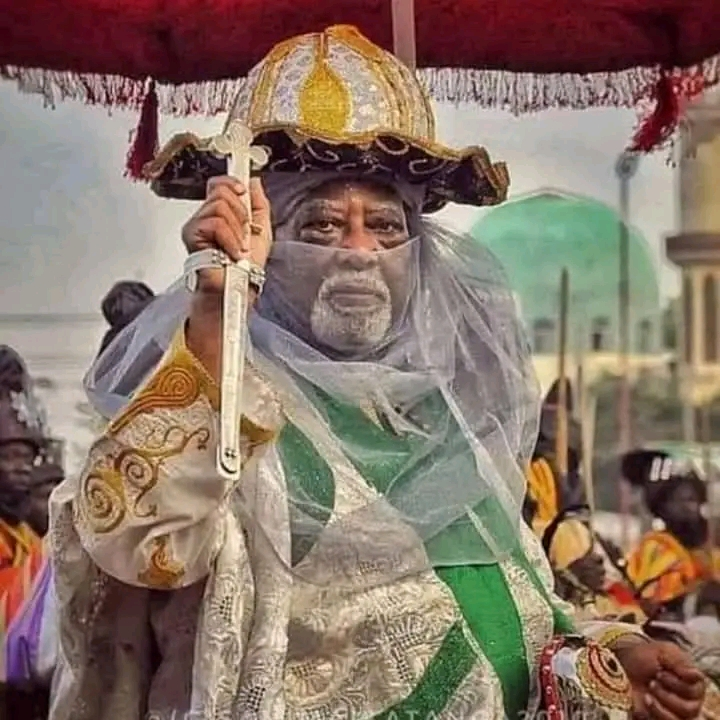
Ado Bayero stands as one of Northern Nigeria’s most revered leaders, a monarch whose reign of over 50 years (1963–2014) became a symbol of wisdom, stability, and cultural preservation. Known for his humility, vision, and unwavering commitment to his people, the late Emir of Kano transformed the emirate into a model of leadership that blended ancient traditions with modern governance.
Born in 1930 into the royal lineage of the Kano Emirate, Ado Bayero inherited both responsibility and legacy. From an early age, he was groomed to understand the weight of kingship: that power is stewardship, tradition is duty, and leadership is service. His early education combined Islamic scholarship with modern administrative training, reflecting the dual demands of his future office.
Ascending the throne in 1963, following the passing of Emir Muhammadu Sanusi I, Bayero immediately set a tone of dignity, accessibility, and moral authority. Unlike many rulers, he balanced ceremonial grandeur with personal humility, making himself approachable to both elites and ordinary citizens. He emphasized that the emirate was not his possession but a trust to be preserved and strengthened.
Throughout his reign, Bayero championed social, educational, and infrastructural development. He expanded schools and universities, including supporting the growth of Bayero University, Kano, ensuring that education became a central pillar of regional progress. He initiated public health campaigns, urban modernization projects, and community development programs that uplifted thousands of Kano citizens. His influence extended to agriculture, trade, and commerce, where he encouraged innovation while preserving traditional economic structures that had sustained Kano for centuries.
As Emir, Bayero also played a pivotal role in national and interfaith dialogue, becoming a respected mediator during periods of political tension. He hosted delegations, advised governors and presidents, and lent his moral authority to resolving disputes. His diplomacy was not limited to politics; he was equally a guardian of faith and cultural heritage, preserving festivals, Hausa traditions, and Islamic scholarship in the emirate.
Bayero’s heroism was reflected not only in his projects but in his personal qualities. He lived modestly, preached patience and respect, and inspired generations through his integrity and foresight. His famous testament, “Leadership is a trust. To rule without justice or humility is to betray history and your people,” encapsulated the principles that guided his long reign.
He also modernized the emirate’s institutions without compromising tradition. The emirate council under his guidance became more structured and transparent, combining centuries-old practices with contemporary governance standards. He ensured that the Kano Emirate remained influential not just culturally, but politically, economically, and socially, serving as a model for other traditional states in Northern Nigeria.
During his tenure, Bayero became a unifying figure in an era of rapid social and political change. He navigated colonial legacies, independence-era politics, and modern governance challenges, always prioritizing the welfare and identity of Kano. His longevity and consistency made him an emblem of stability, bridging generations and maintaining continuity amidst regional and national upheavals.
Upon his passing in June 2014, Northern Nigeria and the nation at large mourned the loss of a statesman, spiritual leader, and cultural icon. His legacy endures not only in the buildings, schools, and institutions he established, but in the moral example he left: a ruler whose authority was defined by service, humility, and courage.
His Royal Highness Alhaji (Dr.) Ado Bayero will forever be remembered as the pillar of Kano, a hero of Northern Nigeria, and a custodian of heritage whose reign safeguarded both tradition and progress for generations to come.
Comments (0)
Leave a Comment
No comments yet. Be the first to comment!