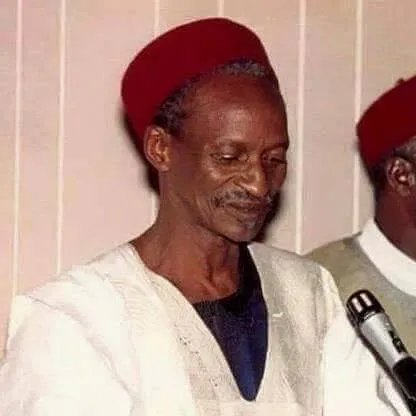
Mamman Shata stands as a towering figure in the cultural history of Northern Nigeria, a musician, poet, and oral historian whose voice carried the joys, sorrows, and moral reflections of generations. Born in 1923 in Katsina, Shata’s life became inseparable from the pulse of his people. Through song and poetry, he chronicled history, celebrated heroes, criticized injustice, and preserved Northern heritage for posterity.
From humble beginnings, Shata displayed prodigious talent in music and storytelling. He mastered the Hausa griot tradition, blending drum, flute, and the kalangu (talking drum) to accompany his lyrics. His compositions were not merely entertainment; they were oral archives of social life, politics, and leadership, making him both an artist and a historian.
Shata’s songs celebrated historical figures and societal values. He praised rulers, warriors, and community leaders for courage, wisdom, and justice, while admonishing the powerful when they strayed from moral duty. His work elevated leaders like Sir Ahmadu Bello, Sardauna of Sokoto, and Emirs of Kano and Katsina, weaving their deeds into the collective memory of the North. One of his often-repeated testaments captures his mission: “I sing for the people, for their stories, their heroes, and their conscience. A society without song is a society without memory.”
Mamman Shata’s impact extended beyond politics into everyday life. His songs addressed farmers, traders, and townsfolk, reflecting their struggles, triumphs, and aspirations. In doing so, he gave voice to ordinary citizens while embedding social lessons, ethical reflection, and historical knowledge into his artistry. His music was a vehicle for education, morality, and cultural continuity.
Over his decades-long career, Shata recorded hundreds of albums, toured the North, and performed at festivals, religious ceremonies, and civic events. His ability to improvise lyrics in response to current events made him a living commentator, a form of real-time historical documentation. Through his artistry, he reinforced values of courage, honesty, diligence, and community cohesion, shaping the moral and cultural compass of Northern Nigeria.
Shata’s genius lay not only in his musical talent but in his vision of music as a societal instrument. He bridged the past with the present, turning oral tradition into enduring cultural memory. Even today, young musicians and cultural scholars study his compositions to understand Hausa music, language, and history.
Mamman Shata Katsina passed away in 1999, leaving a legacy that transcends entertainment. His songs continue to echo across Northern Nigeria, reminding communities of their roots, their heroes, and their moral responsibilities. He is rightly hailed as the voice and conscience of the North, a cultural hero whose life and work preserved the heartbeat of a civilization for generations to come.
Comments (0)
Leave a Comment
No comments yet. Be the first to comment!