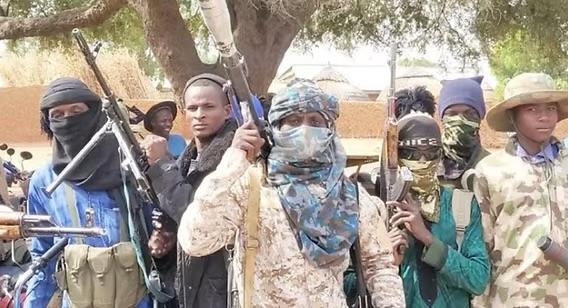
Northern Nigeria continues to reel under a relentless wave of violence fueled by insurgency, banditry, and extremist attacks, with recent incidents claiming hundreds of lives and displacing thousands. Security experts and local officials describe the situation as a deepening crisis, where armed groups exploit ungoverned spaces in the region’s vast forests and rural areas. Amid this turmoil, the majority of victims are from the predominantly Muslim population, highlighting the intra-communal nature of much of the violence despite perpetrators often claiming religious motivations.
The latest spate of killings underscores a pattern that has persisted for over a decade, beginning with the Boko Haram insurgency in 2009, which aimed to establish an Islamic caliphate in the northeast. Since then, the conflict has evolved, splintering into factions like the Islamic State West Africa Province (ISWAP) and merging with criminal banditry in the northwest. At least 2,266 people were killed by bandits or insurgents in the first half of 2025 alone, surpassing the previous year’s total, with the trend showing no signs of abating into 2026.
Key Recent Attacks Highlight the Crisis
One of the deadliest incidents this year occurred on February 3-4 in Kwara State, where armed extremists attacked the villages of Woro and Nuku. At least 162 people were killed in a massacre involving mass shootings, arson, and kidnappings, with estimates suggesting the toll could rise to 200 or more. The attackers, reportedly linked to the Lakurawa group—a Boko Haram splinter affiliated with Islamic State-Sahel Province—targeted residents who refused to adhere to their interpretation of Sharia law. Survivors described a night of terror, with gunmen binding victims’ hands before executing them, burning homes, and abducting dozens. Kwara’s governor labeled it a “deliberate and brutal massacre,” noting that the victims were overwhelmingly local Muslims.
In the northwest, banditry has intensified. On February 15, armed groups on motorcycles raided villages in Niger State, killing dozens and torching communities, leading to curfews and widespread trauma. Similarly, in Zamfara State—long an epicenter of such violence—gunmen killed at least 50 people in a raid on Tungan Dutse village on February 20-21, abducting women and children while setting buildings ablaze. Residents reported the attack as part of ongoing bandit operations from forested hideouts.
The northeast remains plagued by Boko Haram and ISWAP remnants. In Borno State, suspected militants killed around 20 laborers in a February attack, while separate incidents in early February claimed lives in construction sites and military bases. Nigerian forces have responded with operations, including the killing of a top Boko Haram commander on February 1, but attacks persist. In Kebbi State, 34 Muslims, including 23 young people, were killed during Ramadan in coordinated attacks by Lakurawa terrorists targeting worshippers in mosques and homes.
Other notable incidents include killings in Katsina (21 deaths on February 3) and ongoing abductions across states like Sokoto and Kaduna. Overall, these attacks have displaced over two million people since the insurgency’s onset, with thousands more killed in 2026 alone.
Muslims as Majority Victims: A Stark Reality
In a region where Muslims constitute the overwhelming majority of the population—often over 90% in states like Borno, Zamfara, and Kebbi—the victims of these insurgencies and bandit attacks are predominantly Muslim. Groups like Boko Haram and Lakurawa, while invoking Islamist ideologies, frequently target fellow Muslims who resist their doctrines or are caught in crossfire and extortion schemes. For instance, the Kwara massacre explicitly victimized local Muslims who rejected the attackers’ “strange doctrine,” resulting in mass burials and devastated communities. Similarly, attacks in Kebbi during religious observances underscore how these groups perpetrate Muslim-on-Muslim violence, blending ideological zeal with criminal motives like kidnapping for ransom and cattle rustling.
Analysts note that this dynamic challenges narratives of purely interfaith conflict, as violent deaths in northern Nigeria are largely driven by intra-Muslim clashes, resource disputes, and governance failures. Community leaders and social media voices in the north have echoed this, decrying the silence on these killings and calling for accountability from leaders.
Government Response and International Involvement
The Nigerian government has deployed troops and conducted airstrikes, with U.S. support including military advisers for intelligence sharing following strikes in December 2025. However, critics label these as “stunning security failures,” pointing to ignored warnings and fragmented responses. Protests in Kano and online outcry demand restructuring or stronger action against the “Fulani terrorists” some blame for the chaos.
As the crisis evolves, with potential convergence of jihadist and criminal networks, calls grow for preventive measures and community-led solutions. Yet, for many in northern Nigeria, the daily fear persists, with one resident lamenting, “Do we even have leaders in Arewa?” The path to peace remains uncertain, but the human cost—predominantly borne by Muslim communities—demands urgent attention.
Comments (0)
Leave a Comment
No comments yet. Be the first to comment!