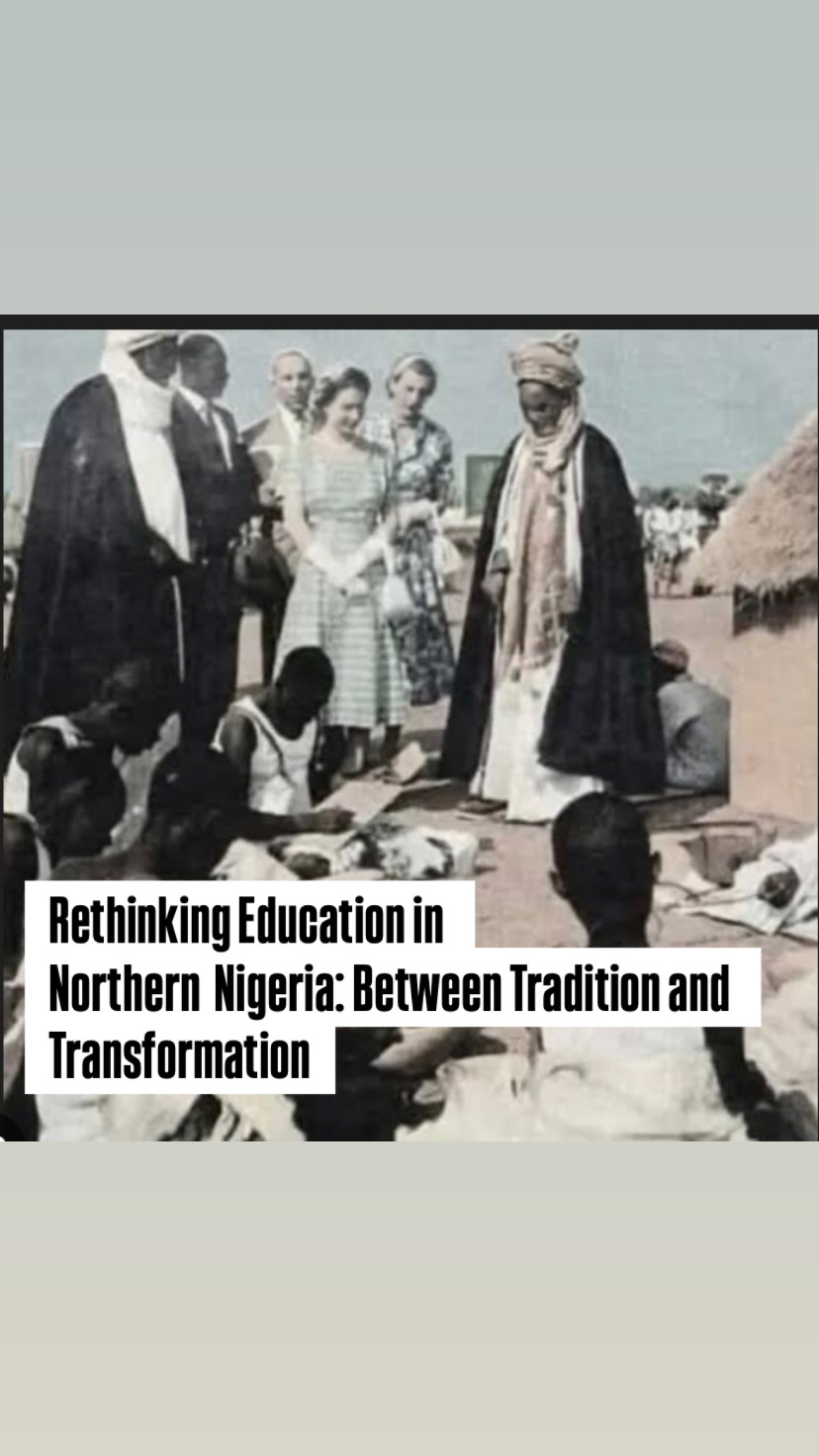
For decades, the region has faced significant educational challenges. Issues such as limited access to schools in rural areas, economic hardship, insecurity, and gender disparities have affected enrollment and retention rates. In many communities, children, especially girls still struggle to complete basic education due to social expectations, early responsibilities, or lack of infrastructure.
Yet, this is only one side of the story.
Northern Nigeria also carries a long and respected history of learning. From Qur’anic education systems to traditional scholarship centers, knowledge has always been part of the region’s identity. Informal education—rooted in faith, discipline, and moral teaching has shaped generations, producing individuals grounded in values and community responsibility.
Today, the challenge is not choosing between traditional and modern education, but finding a way to make them coexist meaningfully.
Across the region, there are growing efforts to reform and strengthen the education system. Governments, non-governmental organizations, and community leaders are working to improve school infrastructure, train teachers, and encourage enrollment, particularly for girls. Initiatives focused on integrating Qur’anic education with formal curricula are also gaining attention, aiming to bridge the gap between religious and Western education.
Technology is slowly becoming part of this transformation. Digital learning tools, radio education programs, and community-based teaching models are being introduced to reach children in underserved areas. While progress remains uneven, these efforts signal a shift toward more inclusive and adaptive learning systems.
However, sustainable change requires more than policy, it requires trust. Communities must see education not as a disruption to their values, but as an extension of them. When education respects culture and faith, it becomes more acceptable, more effective, and more lasting.
There is also a growing recognition among young people in the North. Many are beginning to challenge limitations, pursue education beyond traditional expectations, and advocate for change within their communities. This quiet shift may be one of the most powerful forces shaping the future of education in the region.
The story of education in Northern Nigeria is not one of failure, but of transition. It is a system evolving under pressure, yet filled with potential. With the right balance of tradition, innovation, and community engagement, education can become not just a tool for development, but a bridge between generations.
The future of the North will not be defined by its challenges alone,
but by how it chooses to educate its next generation.
Comments (0)
Leave a Comment
No comments yet. Be the first to comment!