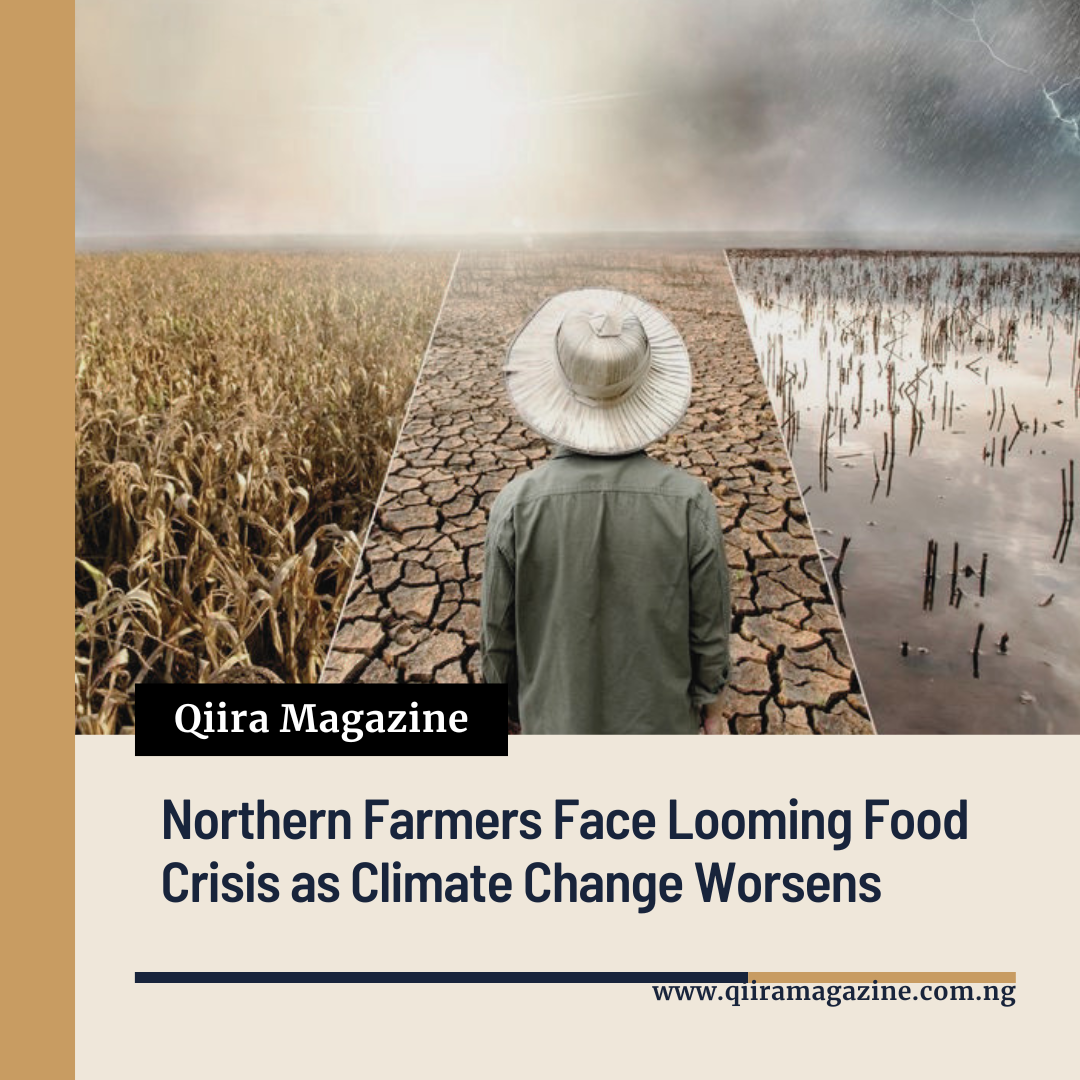
Climate change is no longer a future threat, it is affecting farmers’ fields and livelihoods today. Smallholder farmers, who grow staples such as maize, cassava, millet, sorghum and rice, report increasingly erratic weather patterns, prolonged dry spells, and unreliable rainfall that disrupt planting and harvest cycles. Research shows that drought remains the biggest climate‑related threat to these crops, with flooding also damaging fields and causing root rot, especially for maize and cassava. 
Farmers in river‑dependent areas have seen water sources dry up as dry seasons lengthen and rainfall becomes unpredictable. In some communities, riverbeds that once supplied water for crops now lie cracked and empty, forcing farmers to dig deeper for groundwater or abandon their fields altogether. Conservation groups warn that without sustainable irrigation and water management, food production will continue to decline. 
The World Meteorological Organisation reports that Nigeria is experiencing rising temperatures, making 2025 likely one of the hottest years on record—a sign of climate change’s growing imprint on the local environment. Higher temperatures and shifting rainfall patterns make it harder for staple crops to mature, reducing yields and threatening food security for millions. 
Farmers themselves are calling for support. In Kebbi State, a large survey found that most smallholder farmers are aware of climate change and see irrigation as crucial to sustaining production. They are urging government subsidies for solar‑powered irrigation systems, which have already helped increase crop yields and boost income for the small percentage of farmers who can afford them. 
These changes are occurring against the backdrop of a broader food security challenge. United Nations and humanitarian agencies warn that tens of millions of Nigerians now face severe food insecurity, with rural populations in the North among the most vulnerable due to combined pressures of climate shocks, conflict, and economic instability. 
Experts say that adaptation is possible but urgent action is needed. Investments in climate‑smart agriculture, irrigation infrastructure, drought‑resistant crop varieties, and early warning systems are critical to help farmers manage climate risks. Without such support, communities that rely on rain‑fed farming risk facing deeper hunger and rising poverty as weather patterns grow more unpredictable.
Comments (0)
Leave a Comment
No comments yet. Be the first to comment!