⸻
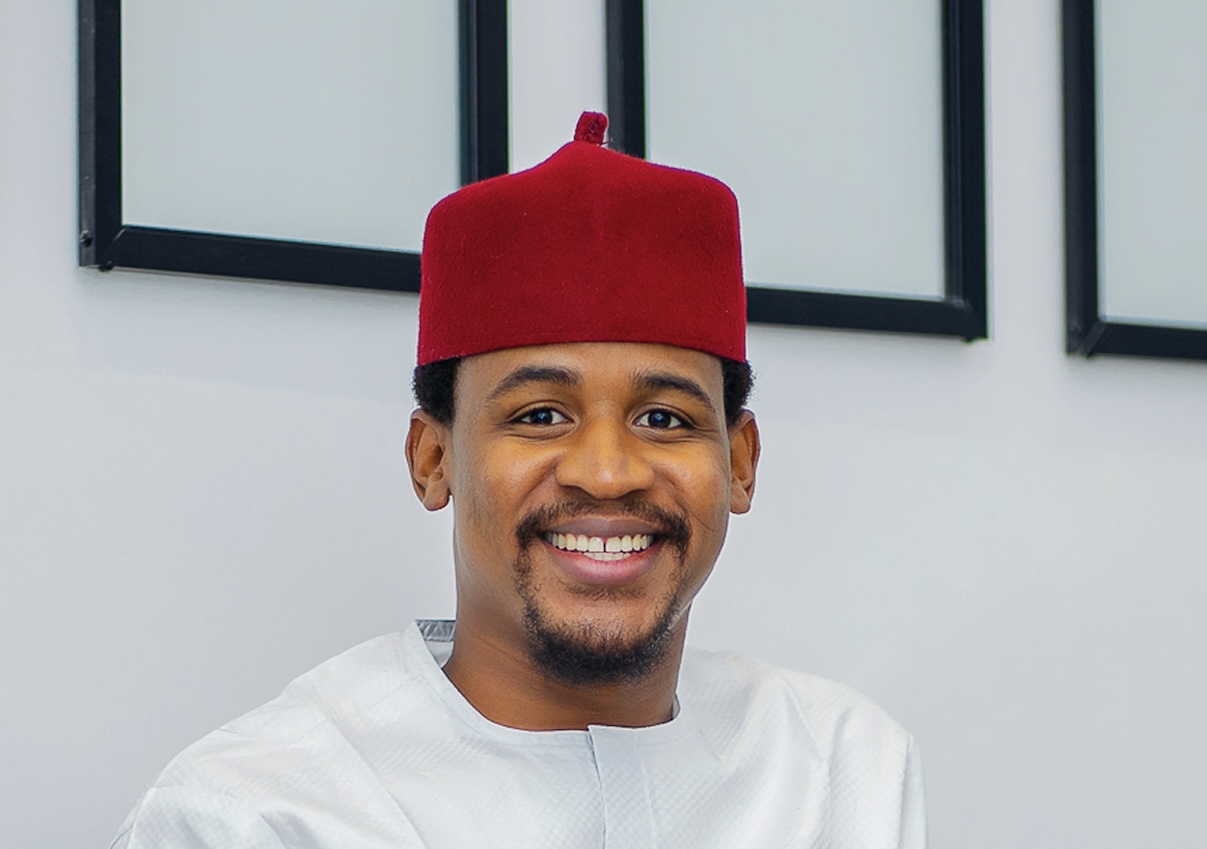
Interviewer: Your book title is bold—“The Man They Feared, and the Truth They Buried.” It almost sounds like a confrontation. What pushed you to write it?
Sameer Lukman Ibraheem:
Because silence can be more dangerous than lies. And when it comes to General Sani Abacha, we have had both—too much silence where questions should have been asked, and too many loud conclusions where evidence should have been examined. I did not set out to defend a man. I set out to confront a narrative.
From the very beginning, something felt off. How does a leader remain so central to Nigeria’s history, yet so narrowly defined? Why is his name enough to end conversations rather than begin them? That contradiction is what pulled me in.
Interviewer: You describe him as “the man they feared.” Who exactly feared him—and why?
Sameer:
Fear operates on many levels. Political rivals feared him. International actors were uncomfortable with him. Even within his own circle, there were those who respected him publicly but feared him privately.
But fear does something else—it simplifies. It reduces a complex figure into a single emotion. And once that happens, truth becomes secondary.
Abacha was feared not just for what he did, but for what he represented: control, defiance, and an unwillingness to bend. Whether one agrees with him or not, those traits made him difficult to ignore—and even harder to narrate honestly.
Interviewer: You mentioned his military career. Why is that important to your argument?
Sameer:
Because it tells you who he was before power defined him.
Abacha did not arrive at the top by accident. He was one of the few Nigerian officers who rose through every rank without skipping a step. That matters. It means he understood the institution from the ground up—the discipline, the hierarchy, the consequences of command.
Yet, when people talk about him, they jump straight to the presidency—as if his entire life began and ended there. That is not analysis; that is reduction.
Interviewer: In your book, you suggest he became a “villain” partly because he is no longer alive to speak. That’s a strong claim.
Sameer:
It is a necessary claim. The dead do not argue back. They cannot correct exaggerations. They cannot challenge distortions. Over time, their silence becomes a canvas for others.
And so, Abacha became something fixed—a permanent villain in Nigeria’s political memory. But history should never be that convenient. No human being is that simple.
As reflected in the author’s perspective, his story has been “fractured, selectively told, and heavily mediated.” That is not how truth survives. That is how it is buried.
Interviewer: Your tone suggests frustration—not just with history, but with Nigerians themselves.
Sameer:
Not frustration—concern. Because we have outsourced our memory. We repeat narratives we did not investigate. We inherit judgments we did not question. And over time, those borrowed conclusions become our “truth.”
What disturbed me most was not criticism of Abacha—it was the lack of curiosity about him. That is far more dangerous.
Interviewer: You also touch on betrayal. That seems personal in your writing.
Sameer:
Because it is human.
What I struggle to understand is how those who stood with him—those who benefited from his trust—later became silent, or worse, contributors to his distortion.
It raises uncomfortable questions:
Was it fear? Survival? Opportunism?
When those closest to a man abandon his memory, history does not just become incomplete—it becomes unreliable.
Interviewer: If you had to summarise your mission in one sentence, what would it be?
Sameer:
To reopen a closed case. Not to declare Abacha innocent. Not to crown him a hero. But to insist that his story deserves interrogation, not repetition.
Interviewer: And what do you hope happens after people read your book?
Sameer:
I hope they become uncomfortable. Comfort is the enemy of truth. If a reader finishes this book and still holds the same opinion—but now with deeper understanding, stronger reasoning, and awareness of complexity—then I have succeeded.
But if they begin to question what they thought they knew, then I have done something even more important.
Closing Reflection
In “General Sani Abacha: The Man They Feared, and the Truth They Buried,” Sameer Lukman Ibraheem does not merely revisit a controversial leader—he challenges the very process by which history is formed. The cover itself signals defiance, a refusal to accept inherited conclusions without scrutiny. 
This is not just a book about Abacha.
It is a book about power, memory, and the dangerous comfort of one-sided stories.
Comments (1)
Leave a Comment
Bilal Bello
Apr 22, 2026 at 2:20 PMA very bold attempt at going at loggerheads with misinformation and doctored historical accounts with respect to The General's lifetime. Thumbs-up Sameer.