This is no longer merely an environmental or infrastructural problem. It is a national scandal. A developmental crime scene buried beneath mud, propaganda, and decades of political deception.
A River Once Central to Northern Ambition
The navigability of the River Niger has fascinated governments for more than a century. During the colonial era, Frederick Lugard recognized the immense strategic importance of giving the Northern Protectorate direct economic access to the sea. Around 1909, colonial authorities intensified dredging and channel management efforts to support trade in agricultural commodities such as groundnuts, cotton, hides, and minerals.
Paddle steamers, barges, and river craft moved goods through the river system during high-water seasons, linking northern commercial centers to downstream ports. The Royal Niger Company and other colonial trading interests relied heavily on the river for movement of exports and administrative logistics. Baro Port emerged as a major gateway to Northern Nigeria, while Lokoja, Onitsha, and other river towns became strategic commercial nodes.
Even after independence, the dream persisted.
In the 1950s and beyond, studies continued on dredging and training works aimed at achieving year-round navigation. The river was viewed not merely as a body of water, but as a potential economic lifeline capable of transforming Northern Nigeria’s trade architecture.
But nature alone was never the greatest obstacle.
Yes, the river has always faced challenges: seasonal shallows, shifting sandbars, rapids, upstream silting, and fluctuating water levels. Yet what ultimately crippled the River Niger was not geography. It was political neglect.
As Nigeria became increasingly dependent on oil revenues after the civil war, national infrastructure priorities shifted heavily toward coastal cities, roads, and southern maritime corridors. Inland waterways were abandoned. Rail systems deteriorated. River ports decayed. Northern trade routes lost strategic attention.
By the 1990s and early 2000s, the River Niger had largely ceased to function as a reliable commercial transport corridor for large-scale cargo movement into the North. Silting intensified due to erosion, deforestation, unchecked environmental degradation, upstream dam activity, and the creeping effects of desertification often described as the “downward march of the Sahara.”
The river was slowly choking to death while Nigeria watched.
Yar’Adua’s Bold Gamble
Then came Umaru Musa Yar’Adua.
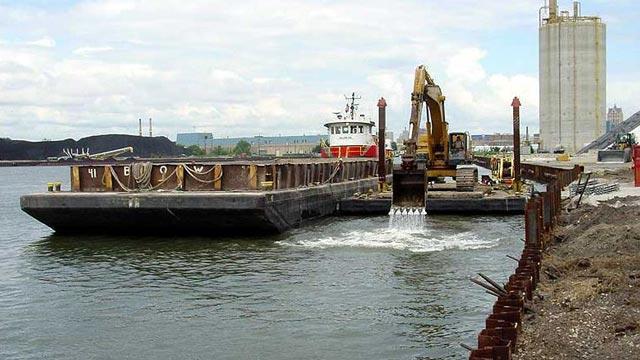
In 2009, Yar’Adua initiated what many believed would become the most serious inland waterway revival effort in modern Nigerian history. The administration flagged off the dredging of the Lower River Niger from Warri in Delta State to Baro in Niger State, covering approximately 572 kilometers.
The vision was ambitious and transformative:
year-round navigability,
cheaper transportation for bulk goods,
revival of inland commerce,
industrial expansion,
job creation,
and renewed economic integration between Northern Nigeria and the coast.
The contract, valued at roughly N36 billion, was celebrated as a historic intervention capable of redefining Northern Nigeria’s economic future.
Unlike many leaders before him, Yar’Adua appeared to genuinely understand the strategic significance of the river to northern agriculture, trade, manufacturing, and logistics. For once, the project did not feel like empty rhetoric.
Then tragedy intervened.
Yar’Adua’s prolonged illness and eventual death in 2010 abruptly disrupted the momentum behind the project, leaving behind uncertainty, political controversy, and unfinished expectations.
Jonathan’s “Completion” and the Beginning of Doubt
When Goodluck Jonathan assumed office, the dredging project became increasingly politicized.
Northern political voices accused Jonathan’s administration of slowing or undermining the project because its economic benefits would disproportionately strengthen Northern Nigeria. Jonathan denied these accusations and maintained that the dredging remained part of his administration’s transformation agenda.
Eventually, government officials declared the project completed between 2011 and 2013 at enormous cost.
But then came the uncomfortable question that still haunts the project today:
Completed for what exactly?
Because despite the billions reportedly spent, the dramatic economic transformation Nigerians were promised never materialized.
Large-scale commercial shipping did not meaningfully return.
Ocean-going cargo vessels did not begin flooding northern river ports.
Industrial river trade did not explode.
Baro did not become the thriving commercial gateway politicians advertised.
Instead, silting rapidly returned. Maintenance dredging was weak or inconsistent. Port infrastructure remained underdeveloped or inactive. Security concerns persisted. Supporting logistics systems were absent. Rail integration remained inadequate.
Yes, barges and smaller vessels occasionally operate along certain sections of the river, but the grand vision sold to Nigerians — a fully functional inland commercial corridor transforming Northern Nigeria — remains largely unrealized.
Critics, including later Transport Minister Rotimi Amaechi, accused the Jonathan administration of wasting tens of billions of naira on a project that produced little sustainable impact.
And once again, Nigerians were left wondering whether they had witnessed genuine development or merely another sophisticated public-sector feeding frenzy disguised as national progress.
Buhari, Baro, and the Politics of Symbolism
Under Muhammadu Buhari, expectations briefly resurfaced.
His administration promised continuity and repeatedly referenced the importance of inland waterways. Rotimi Amaechi openly criticized previous spending patterns while suggesting that only limited follow-up work was necessary.
Then came the grand commissioning of Baro Port.
Television cameras rolled. Politicians smiled.
Speeches filled the air. Headlines declared revival.
But after the ceremonies ended, reality returned.
Baro Port remained largely underutilized.
Commercial activity stayed minimal.
Cargo traffic failed to justify the enormous public investment.
Maintenance dredging remained inconsistent.
The broader river transport ecosystem still lacked the infrastructure needed for sustainable success.
The port became another familiar Nigerian symbol: expensive, celebrated, commissioned, and quietly abandoned.
A country obsessed with commissioning projects often appears far less interested in ensuring they actually work.
Tinubu and the Silence of Continued Neglect
Under Bola Ahmed Tinubu, the silence surrounding the River Niger has become even more glaring.
No major national revival agenda has emerged.
No aggressive inland waterway strategy dominates public discourse.
No visible urgency reflects the scale of the economic losses caused by continued neglect.
Instead, the dredging project appears to have entered yet another phase of bureaucratic stagnation where reports are written, budgets quietly appear and disappear, and the river continues silting while ordinary Nigerians bear the consequences.
And those consequences are enormous.
Northern farmers face crippling transportation costs moving produce across failing highways.
Manufacturers struggle with logistics inefficiencies.
Heavy cargo transport remains painfully expensive.
Road congestion worsens.
Regional economic integration suffers.
Trade opportunities disappear.
Meanwhile, the River Niger — which could significantly reduce transportation costs and open alternative trade corridors — remains tragically underutilized.
The Bigger Scandal Beneath the Water
The most painful aspect of this saga is not merely the engineering difficulty of dredging the river.
No serious analyst denies that maintaining year-round navigability on the River Niger is technically complex and financially demanding. Seasonal water fluctuations, upstream dams, climate pressures, environmental concerns, and constant silting require continuous maintenance and sophisticated long-term planning.
But complexity does not explain the scale of failure Nigerians have witnessed.
What Nigerians see is a pattern:
billions allocated,
contracts awarded, commissions inaugurated, photo opportunities staged, and then silence.
Again and again.
The truth is brutal:
capital dredging alone cannot revive the River Niger.
Success requires permanent maintenance dredging, functional inland ports, rail connectivity, private sector participation, cargo ecosystems, environmental safeguards, security architecture, and honest governance.
Without these, dredging simply becomes another expensive political performance.
And that is precisely why many Nigerians increasingly view the River Niger project not as a development initiative, but as a recurring elite enrichment scheme wrapped in patriotic language.
Northern Nigeria Deserves Better
For Northern Nigeria, the River Niger is not nostalgia. It is economics. It is logistics. It is survival.
A functional inland water transport system could dramatically reduce the cost of moving agricultural produce, solid minerals, fertilizers, industrial materials, and manufactured goods. It could create jobs, reduce pressure on deteriorating roads, stimulate riverine communities, attract investment, and reconnect neglected economic corridors.
Instead, Northern Nigeria continues paying the price for decades of indecision, corruption, shallow planning, and political inconsistency.
The river keeps flowing.
But opportunity keeps sinking.
Nigeria must decide whether the River Niger will remain a symbol of wasted potential and elite hypocrisy or become the transformational economic asset it was always capable of being.
Because enough money has already disappeared beneath those waters.
What Nigerians need now are not more dredging announcements, commissioning ceremonies, or recycled promises.
They need results.
Comments (0)
Leave a Comment
No comments yet. Be the first to comment!