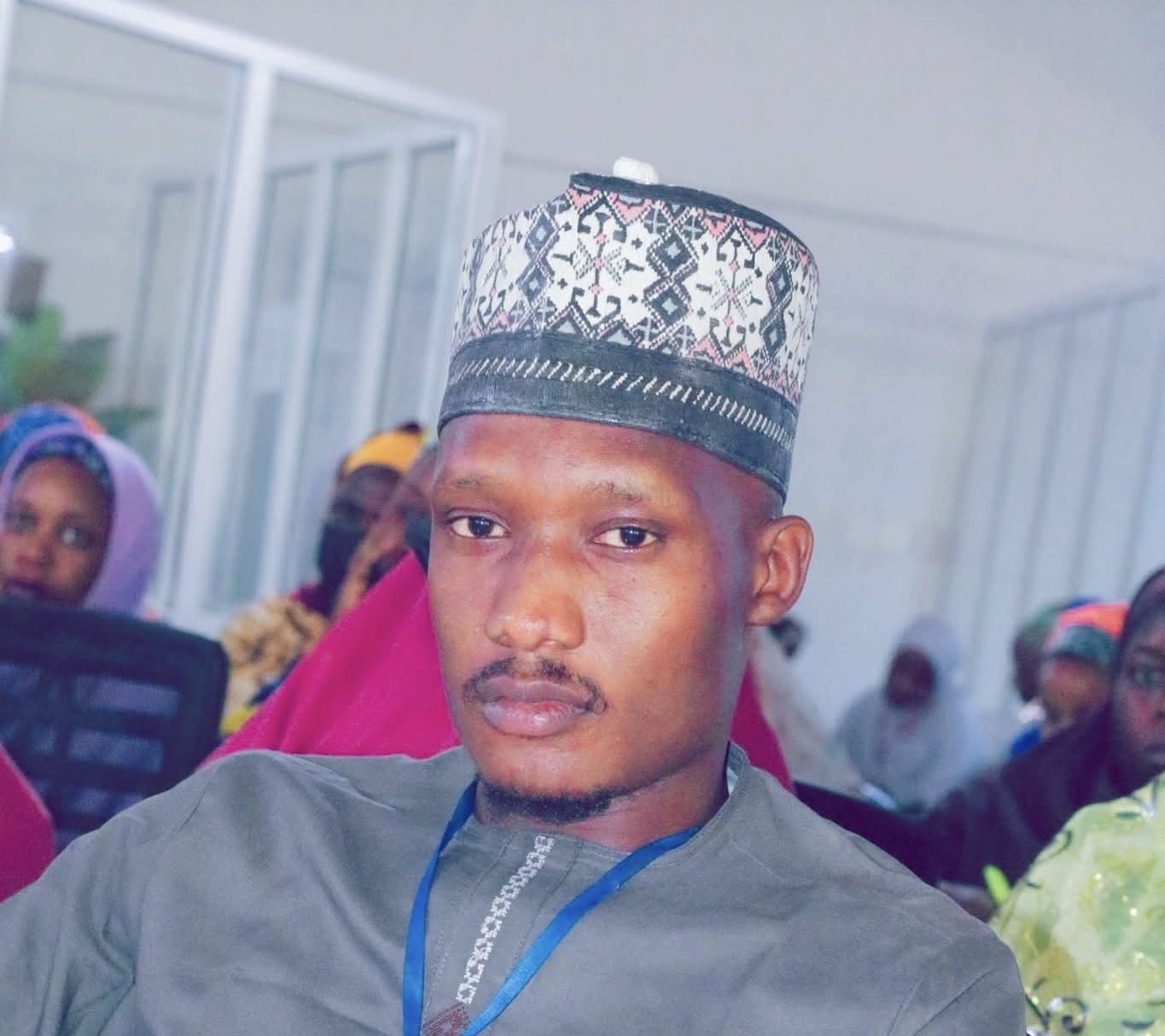
Founded by Ibrahim Yahya Harande alongside Salaam Digital Media, iHarande is not just a YouTube initiative as many assume. It has evolved into a growing educational ecosystem with its own learning platform and mobile application designed to provide accessible academic and skill-based education to millions of Hausa-speaking people. From teaching Physics, Chemistry, and Mathematics in Hausa to building a structured digital learning system for underserved communities, Harande’s mission is driven by one core belief: education becomes more powerful when people learn in the language they truly understand.
The Beginning of the Vision
According to Harande, the idea behind iHarande started around 2019 during a period when a controversial television program was heavily influencing young people negatively. “While everybody was condemning the program, I was thinking about solutions,” he explained. “I started analyzing the problems facing our youths, and I realized that education was at the center of almost everything.”
Rather than simply criticize societal decline, he decided to act. He began creating free tutorial videos in Hausa for academic subjects like Physics, Chemistry, and Mathematics, uploading them online to help students who struggled with English-based instruction. What started as a simple experiment soon revealed a much deeper need across Northern Nigeria and other Hausa-speaking regions.
The Phone Call That Changed Everything
One particular experience completely changed Harande’s perspective about the project. “After almost a year of creating tutorial videos, one morning a university lecturer called me,” he recalled. “He introduced himself and asked when we were uploading the next episode of our Chemistry in Hausa series because the tutorials were helping him and his students.”
That conversation became a turning point. “That was when I realized this was no longer just content creation,” he said. “People genuinely needed this. That was what inspired me to properly structure the platform, build the app, and monetize it because the demand and impact were massive.”
Why the Name ‘iHarande’?
The name itself carries family history and academic legacy. Harande explained that the platform was inspired by his father’s surname, HARANDE, which he associates strongly with education.
“My father is a professor at Bayero University Kano, Faculty of Education,” he said. “The ‘i’ represents ‘Me,’ so when you say iHarande, it’s like saying ‘I am Harande.’ And HARANDE represents education.” For him, the name symbolizes continuity, identity, and educational purpose.
The Language Barrier Problem
Harande strongly believes that language remains one of the biggest barriers to educational development among Hausa-speaking communities. “The massive failure in examinations, the lack of skills, and the low awareness among many people convinced me that language barrier is a major issue,” he explained.
He believes millions of students are intellectually capable but struggle because they are forced to learn complex concepts in unfamiliar or uncomfortable languages. The overwhelming engagement from audiences across Hausa-speaking states and neighboring countries strengthened his conviction. “The calls, messages, and support we received made us realize people were hungry for this kind of education,” he said. “People were willing to do whatever it takes to improve themselves.”
Beyond YouTube: Building an Educational Ecosystem
Today, iHarande has grown far beyond free YouTube tutorials. The platform now includes a dedicated app and structured digital learning system aimed at delivering affordable and accessible education to millions of Hausa-speaking users.
According to Harande, the vision is enormous. “Our mission is to become the solution to any education-related problem among more than 150 million Hausa-speaking people,” he said.
His long-term ambition is to transform iHarande into a global learning platform that expands beyond Hausa into other native and international languages. “We envision a world where anybody, regardless of location or background, can access affordable and relevant education to improve their life and contribute to society.”
And in the next decade, he hopes the platform will be remembered for something much bigger than business. “In the next 10 years, I want people to remember iHarande as their savior.”
Building Through Pain and Setbacks
Like many startups in Africa, the journey has not been easy. “One of our biggest challenges at the beginning was collaboration,” Harande admitted. “Very few people believed in the vision, even after we had proof of demand and revenue.”
Funding became another major obstacle. “Until today, no funding has come through. Everything has been sponsored solely by us.”
The challenges became even more painful after repeated technical failures. “In 2022, I funded and developed the platform, spent money on the team and resources, and it crashed completely. I escaped with only the domain name.” Then it happened again. “The same thing happened in January 2023.”
But instead of walking away, the team rebuilt everything once more. “In 2025, we started again from scratch. And today we have gone far. The lessons were painful, but they taught us a lot.”
“At the End, You Are Alone”
Harande describes entrepreneurship as emotionally exhausting and deeply lonely. “There were moments I wanted to give up,” he admitted. “Not because I stopped believing in the idea, but because I became exhausted. I even tried finding someone to take over while I moved on with my life.”
But the vision refused to die. And through the process, he learned what he considers the harshest lesson of entrepreneurship: “At the end, you are all alone.”
Still, his motivation remains intact. “My vision keeps me going,” he said.
What Makes iHarande Different?
According to Harande, two things make iHarande unique. First is the platform’s focus on academic education in Hausa. “Most platforms focus mainly on skills acquisition,” he explained. “But we teach actual academic subjects like Physics, Chemistry, and Mathematics in Hausa.”
Second is his own background in digital systems and marketing. “As founder and CEO, I have strong foundations in digital marketing, content creation, marketing strategy, and technology as a whole.”
He believes Hausa-speaking communities are highly ready for digital transformation. “More than 70% of Hausa-speaking people need our services and are willing to embrace innovation.”
The Power of Learning in Hausa
One event particularly convinced Harande that the future of native-language education is massive. During iHarande’s pre-launch activities, the team organized a four-hour training event for business owners and charged ₦5,000 per participant.
“We had more than 130 participants,” he said proudly. “What touched me most was the willingness of people to learn in Hausa.”
That experience confirmed something powerful for him: people do not reject education — they reject systems that fail to communicate with them properly.
Leadership, Discipline, and Team Building
Harande says the values guiding him are integrity, learning, relearning, and unlearning. When building teams, he focuses on two kinds of people: those with passion and those with exceptional skills.
“If someone has passion, even without skills, we train and invest in them,” he explained. “And if someone has high-level skills, we pay them properly for results.”
The qualities he values most are passion, integrity, and willingness to learn. For collaborators, trust remains critical.
The Bigger Vision
Despite the setbacks, Harande remains optimistic about the future of technology-driven education. He believes digital innovation is transforming education faster than ever by creating systems capable of solving long-standing societal problems.
And his dream for iHarande is deeply ambitious. “I want at least one person in every house to benefit from iHarande or receive positive impact from it.”
To him, the biggest enemies facing society remain poverty and lack of education. Yet his message to Hausa-speaking communities remains filled with confidence and anticipation:
“Be ready. Not even one percent of what we have planned for you has started yet. Be ready to positively change your life.”
And when asked what success truly means to him, his answer was remarkably simple: “Success is appreciating what you are doing and appreciating what you have.”
Comments (2)
Leave a Comment
Musab Abbas Sani
May 11, 2026 at 1:11 AMWannan shine asalin cigaba na yankin arewa kuma muna alfahari daku.
Ibrahim Yahya Harande
May 10, 2026 at 11:10 PMThis is a masterpiece 🤝🌟