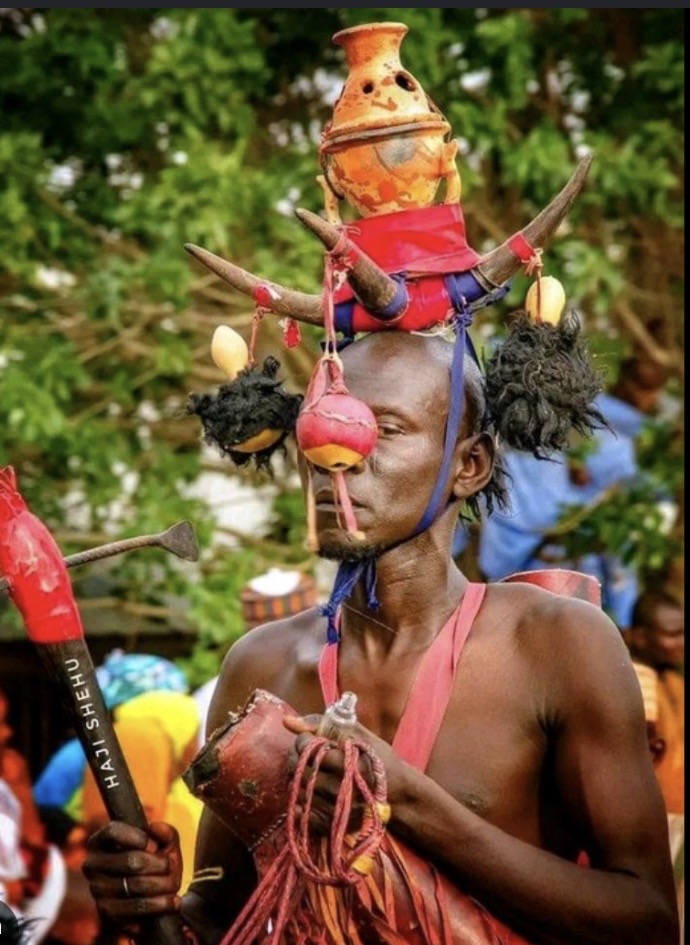
Today, the word “Maguzawa” often refers to a small number of Hausa communities who continue to preserve aspects of these traditional beliefs and customs. However, Maguzanci is much more than a forgotten religion, it is a window into the spiritual, cultural, and social history of one of Africa’s largest ethnic groups.
Understanding Maguzanci is not about encouraging its practice. Rather, it is about understanding where the Hausa people came from and how their beliefs evolved over time.
Before Islam Reached Hausaland
Historical evidence suggests that the Hausa kingdoms were already flourishing centuries before Islam arrived. Cities such as Kano, Katsina, Zaria (Zazzau), Gobir, Daura, Rano, Biram, and others had established political systems, thriving markets, and rich cultural traditions.
Religion played a central role in everyday life.
The people believed that the physical world and the spiritual world existed side by side. Every major event, birth, illness, drought, harvest, marriage, or death, was believed to have both a physical and spiritual explanation.
Many communities believed in a supreme creator, often referred to as Ubangiji, but they also believed that communication with the unseen world occurred through spiritual beings, ancestors, and various supernatural forces.
This belief formed the foundation of what later became known as Maguzanci.
What Did Followers of Maguzanci Believe?
Unlike organized religions with a single holy book or prophet, Maguzanci was passed down orally from one generation to another.
Its beliefs varied from one community to another, but many shared several common ideas.
Followers believed that spirits could influence human life.
Certain forests, rivers, mountains, and ancient trees were considered sacred.
Traditional priests and spiritual leaders acted as intermediaries between the community and the unseen world.
Divination was sometimes used to seek guidance before major decisions such as marriage, farming, warfare, or leadership.
Sacrifices—often involving animals and agricultural produce, were performed in some communities as acts of thanksgiving or requests for protection, rainfall, fertility, or healing.
Festivals, dances, drumming, and communal ceremonies were also important expressions of faith and cultural identity.
The Role of the Bori Tradition
One of the most well-known aspects associated with traditional Hausa religion is Bori.
Bori refers to spiritual possession practices in which participants believed that spirits could temporarily possess individuals during ceremonies involving music, dance, and ritual.
Followers believed these spirits could provide healing, guidance, protection, or explanations for certain illnesses and misfortunes.
Some communities viewed Bori practitioners as healers and custodians of spiritual knowledge.
Others consulted them for personal, family, or community matters.
It is important to note that not every community practicing Maguzanci practiced Bori in exactly the same way.
How Did Maguzanci Influence Hausa Society?
Maguzanci shaped many aspects of early Hausa civilization.
Religious beliefs influenced farming seasons, festivals, naming traditions, conflict resolution, and leadership.
Kings often consulted traditional religious authorities before making major political decisions.
Many annual festivals celebrated today in modified forms have historical roots that predate Islam, although their meanings have changed over time.
Traditional medicine also developed alongside these beliefs, combining knowledge of herbs with spiritual practices.
The Arrival of Islam
Islam began reaching Hausaland gradually through trans-Saharan trade routes between the 11th and 14th centuries.
Muslim traders, scholars, and clerics introduced Islamic teachings to Hausa rulers and merchants.
Initially, Islam spread mainly among the elite.
For centuries, many communities practiced a mixture of Islamic beliefs and older traditional customs.
Over time, Islamic scholarship expanded through the establishment of Qur’anic schools, mosques, and learning centres in cities such as Kano and Katsina.
The major turning point came in the early nineteenth century with the Sokoto Jihad led by Usman ɗan Fodio, which sought to reform religious practices and encourage stricter adherence to Islam.
Following these reforms, Islam became the dominant religion throughout most of Hausaland.
Many traditional practices declined, while others disappeared completely or survived only in isolated rural communities.
How Do Maguzawa View Their Beliefs Today?
The small communities that still identify with aspects of Maguzanci generally see it as an important part of their ancestral heritage.
Many believe their traditions preserve knowledge passed down through generations.
Some continue to perform traditional ceremonies connected to agriculture, healing, or community life.
Others regard their beliefs as a way of maintaining cultural identity rather than rejecting modern society.
Their perspectives vary widely, and not all Maguzawa practice the same customs.
How Is Maguzanci Viewed by Muslims?
From the perspective of mainstream Islam, many traditional Maguzanci practices, particularly those involving spirit mediation, sacrifices to supernatural beings, or seeking help from entities other than Allah, are considered incompatible with Islamic teachings.
As Islam became firmly established across Hausaland, many of these practices were abandoned by Muslim communities.
Nevertheless, historians emphasize that studying Maguzanci is valuable because it helps explain the historical development of Hausa society before Islam and the cultural transformations that followed.
A Living Piece of History
Today, Maguzanci survives only in a limited number of communities, while the overwhelming majority of Hausa people identify as Muslims.
Even so, its influence can still be traced in historical records, oral traditions, archaeological findings, and certain cultural practices whose meanings have evolved over time.
To understand the history of the Hausa people fully is to understand both the era before Islam and the profound changes brought by its arrival.
Maguzanci is not merely the story of an ancient religion.
It is part of the story of how Hausa civilization grew, adapted, and transformed across centuries, leaving behind a legacy that continues to shape conversations about history, culture, and identity in Northern Nigeria.
Comments (0)
Leave a Comment
No comments yet. Be the first to comment!