There is a strange question hiding inside the story of modern progress:
If we have more than the people before us ever had, why do we sometimes feel like we have less?
Our grandparents lived without smartphones, air conditioners, cars, instant communication, supermarkets, streaming services or electricity in many homes. They travelled more slowly, produced more of what they consumed and owned considerably fewer material possessions.
Yet their lives were often organised around something modern life struggles to manufacture:
community.
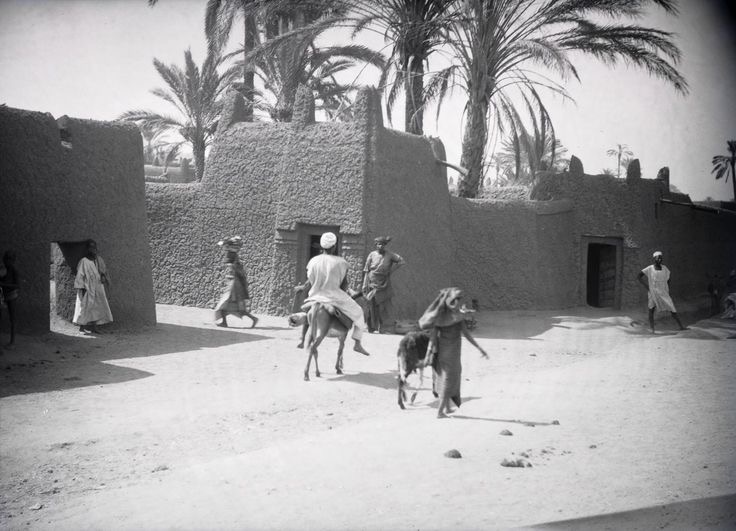
Across older Northern Nigerian communities, life was deeply social. The compound was not merely a place to sleep. It was a place where several generations could live within reach of one another. The neighbourhood was not just a collection of houses. It was a network of relationships.
People depended on one another.
A farmer depended on seasonal knowledge and community labour. A traveller depended on hospitality. Children were raised not only by their parents but within an extended network of relatives and neighbours. Elders were repositories of knowledge because there were fewer institutions competing with them for that role.
Much of life happened collectively, and that matters.
Modern sociology increasingly recognises that social connection is fundamental to human wellbeing. The World Health Organization has described social connection as important to health and wellbeing, while social isolation and loneliness are associated with significant health risks.
Our ancestors did not have the language of “social connectedness.”
But they built their lives around it, their evenings were different.
Without television and smartphones occupying every quiet moment, conversation had more room to exist. People gathered under trees, in courtyards and around compounds. Stories travelled by voice. History was remembered through people.
A child could know the story of their family without searching an archive.
An elder could know the history of a neighbourhood because they had lived through it.
Knowledge was not always stored somewhere. Sometimes, it was stored in people.
This does not mean the old world was peaceful because it was primitive.
That would be a dangerous simplification.
Northern societies experienced wars, political struggles, poverty, disease, displacement and insecurity long before modern technology arrived. Life expectancy was lower, medical treatment was limited and many ordinary tasks required enormous physical labour.
The past was not paradise, but neither was it empty, it richness was measured differently.
A successful life was not necessarily defined by how many possessions a person accumulated. Reputation, family, hospitality, religious devotion, craftsmanship, land, relationships and one’s contribution to the community could carry enormous social value.
There was also a different relationship with time.
The sun mattered, the seasons mattered, the harvest mattered, Rain mattered.
Life was organised around things that could not be hurried.
Today, technology has given us the ability to overcome many of these limitations. We can communicate across continents in seconds. We can travel hundreds of kilometres in hours. We can preserve food, access information and work at times and speeds previous generations could not imagine.
These are genuine achievements.
But every invention changes the way we live.
The same technology that connects us to someone thousands of kilometres away can make us less attentive to the person sitting beside us.
The same convenience that saves time can also fill the time it saves.
And the same abundance that gives us choices can create an endless desire for more.
This is where the older way of life becomes worth examining, not because we should return to it, but because modernity does not require us to abandon everything that came before it.
Perhaps we can keep the technology without losing the community.
The electricity without losing the evening gathering.
The car without forgetting the neighbour.
The smartphone without forgetting conversation.
The modern house without losing the courtyard.
Progress should not mean that everything old becomes worthless.
Perhaps real progress is knowing what to carry forward.
Because the people before us may have had less access to the world.
But many of them had something we increasingly have to deliberately create:
a sense of belonging.
And perhaps that is the question worth asking today.
Not Why didn’t they have more?
But:
What did they have that we have forgotten how to value?
Maybe the answer is not hidden in an old building or an ancient artefact.
Maybe it is sitting in the simplest parts of their lives, a shared meal, a neighbour’s visit, an elder’s story, children playing until sunset,
and a community that understood that no one was meant to live entirely alone.
We do not need to go backwards.
But perhaps, in our rush forward,
we should remember what we are taking with us.
Comments (0)
Leave a Comment
No comments yet. Be the first to comment!